
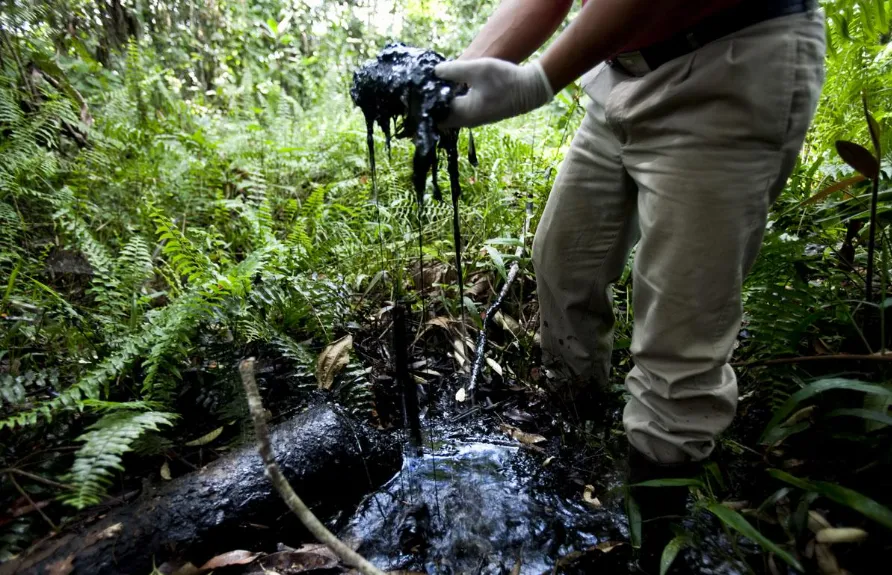
When Environmental Harm Becomes an Investor Counterclaim

Burlington Resources Inc. v Republic of Ecuador (ICSID Case No ARB/08/5), Decision on Counterclaims and Decision on Reconsideration and Award, 7 February 2017.
Burlington v Ecuador is a particularly important case for the development of State counterclaims for environmental harm in investment arbitration.
The Dispute:
Burlington invested in Ecuador’s oil sector through participation in hydrocarbon concessions covering Blocks 7 and 21 in the Ecuadorian Amazon. The dispute arose after Ecuador terminated the relevant participation contracts following Burlington’s refusal to make certain additional payments demanded by the State. Burlington subsequently commenced ICSID arbitration under the United States–Ecuador BIT.
Ecuador responded with counterclaims concerning, among other matters, environmental damage and the condition of oil-production infrastructure left in the concession areas. The environmental counterclaim was substantial: Ecuador initially sought billions of dollars for remediation of soil and groundwater, together with other environmental and infrastructure-related costs.1
The counterclaims raised an important procedural question:
When an investment dispute concerns environmentally harmful activities, can the host State obtain compensation from the investor for environmental damage under the domestic law governing the investment?
The Environmental Counterclaim
Ecuador alleged widespread environmental contamination in Blocks 7 and 21 and argued that Burlington was responsible for the costs of restoring the affected environment.2
Ecuador’s position was significant because it relied on the environmental liability regime contained in Ecuadorian law, rather than treating the BIT itself as the source of the investor’s environmental obligation. This distinction is central to understanding Burlington: the case did not simply establish a general treaty-based duty on investors to protect the environment. Instead, the Tribunal examined the obligations arising under the domestic legal framework applicable to the investment.
Objective Environmental Liability
One of the important issues was the character of environmental liability under Ecuadorian law. Ecuador argued that petroleum operators were subject to objective liability for environmental damage, meaning that liability did not depend upon establishing fault in the conventional sense.3
Burlington disputed this approach and argued, among other things, that Ecuador had failed to establish the necessary damage and causal connection between its operations and the environmental conditions for which it sought compensation.4
The dispute therefore required the Tribunal to distinguish between environmental conditions attributable to Burlington’s operations and conditions arising from other causes, including pre-existing environmental conditions and subsequent operations.
Tribunal Reasoning:
The answer required the Tribunal to examine both its jurisdiction over the counterclaims and the substantive environmental obligations applicable to Burlington.
The Tribunal accepted jurisdiction over Ecuador’s environmental counterclaims. The jurisdictional basis was particularly significant because the investor’s consent to the counterclaims was relevant to the Tribunal’s competence.5 The Tribunal subsequently considered the environmental damage allegedly caused by the investor’s activities.
Tribunal’s approach to Causation
The environmental counterclaim also exposed a difficult evidentiary problem:
How should responsibility be allocated where environmental conditions develop over decades of petroleum operations involving different operators?
Burlington argued that Ecuador had not established the necessary causal connection between the alleged environmental damage and Burlington’s own activities. It also challenged Ecuador’s attempt to attribute pre-existing or subsequently aggravated environmental conditions to Burlington.6
This makes Burlington important beyond the question of counterclaims. It demonstrates that recognising investor responsibility does not eliminate the conventional problems of causation, attribution, evidence and quantification of environmental damage.
The Tribunal found Burlington liable for environmental damage under Ecuadorian law. It concluded that the applicable Ecuadorian legal framework imposed responsibility for environmental harm and awarded Ecuador compensation in respect of that damage.7
The decision therefore demonstrated that counterclaims can move beyond procedural objections or defences and become a basis for affirmative financial liability on the part of an investor.
The Tribunal’s approach is particularly significant when compared with Urbaser. Whereas Urbaser examined whether an investor could bear obligations under international human rights law, Burlington demonstrates how domestic environmental law incorporated into the applicable legal framework of an investment dispute can provide the basis for investor liability.8
The case consequently contributes to a broader development in investment arbitration:
The possibility of a more reciprocal conception of investment governance, in which investment arbitration can accommodate both investor protection and State claims concerning investor conduct.
The Outcome
The Tribunal upheld Ecuador’s environmental counterclaims in significant part and ordered Burlington to pay compensation for environmental damage and infrastructure-related obligations. The outcome demonstrated that investment arbitration can result not only in compensation to an investor, but also in financial liability on the part of an investor towards the host State.
Why the case matters for ISDS
Burlington is significant because it demonstrates that investment arbitration can operate as a forum for State claims against investors, rather than functioning exclusively as a mechanism for enforcing investor rights against States.
The case also illustrates an important distinction between treaty-based investor protection and investor obligations arising from domestic law. The Tribunal’s treatment of Ecuador’s environmental counterclaims shows how domestic environmental obligations can enter an international investment dispute through the applicable law.
For resource-rich States, this has practical significance. Environmental damage associated with extractive investment may generate substantial public costs long after an investment dispute has arisen. Burlington therefore raises a broader question for investment governance:
Who ultimately bears the cost of environmental harm associated with foreign investment?
The case also sits alongside Urbaser in the developing discussion of investor responsibility. While Urbaser considered whether an investor could bear obligations connected with international human rights law, Burlington illustrates how investor responsibility can arise through the domestic legal framework governing the investment.
Key Takeaway
Burlington v Ecuador demonstrates that ISDS can provide a forum not only for investors to challenge State conduct, but also for States to pursue investors for environmental harm arising from investment activities.
FOOTNOTES
- Burlington Resources Inc. v Republic of Ecuador (ICSID Case No ARB/08/5), Decision on Counterclaims, 7 February 2017, paras 52–53. Ecuador claimed USD 2,797,007,091.42, comprising soil and groundwater remediation, groundwater studies, well abandonment and infrastructure damage. ↩︎
- ibid paras 52, 95–99. Ecuador alleged significant soil and groundwater pollution and sought restoration costs; its submissions addressed restoration of the environment and related remediation measures. ↩︎
- Burlington (n 1) paras 80–82, 90, 95–97. Ecuador argued that environmental liability under Ecuadorian law was strict/objective and that the operator could be liable without proof of fault. ↩︎
- Burlington (n 1) paras 122–125. Burlington disputed the application of strict liability to the relevant historical harm and argued that Ecuador had to establish environmental harm and causation ↩︎
- Burlington (n 1) paras 60–74. ↩︎
- Burlington (n 1) paras 146–150, 152–157. Burlington argued that it was liable only for harm caused during its tenure and challenged liability for contamination attributable to Ecuador, prior operators or subsequent operations; it also relied on contractual provisions concerning pre-existing environmental conditions. ↩︎
- Burlington (n 1) paras 1060–1075. ↩︎
- See generally (n 1) paras 1075 onwards. ↩︎

Leave a Reply